Statewide MRI Protocol Harmonization — Lessons from the 2025 Roll-Out
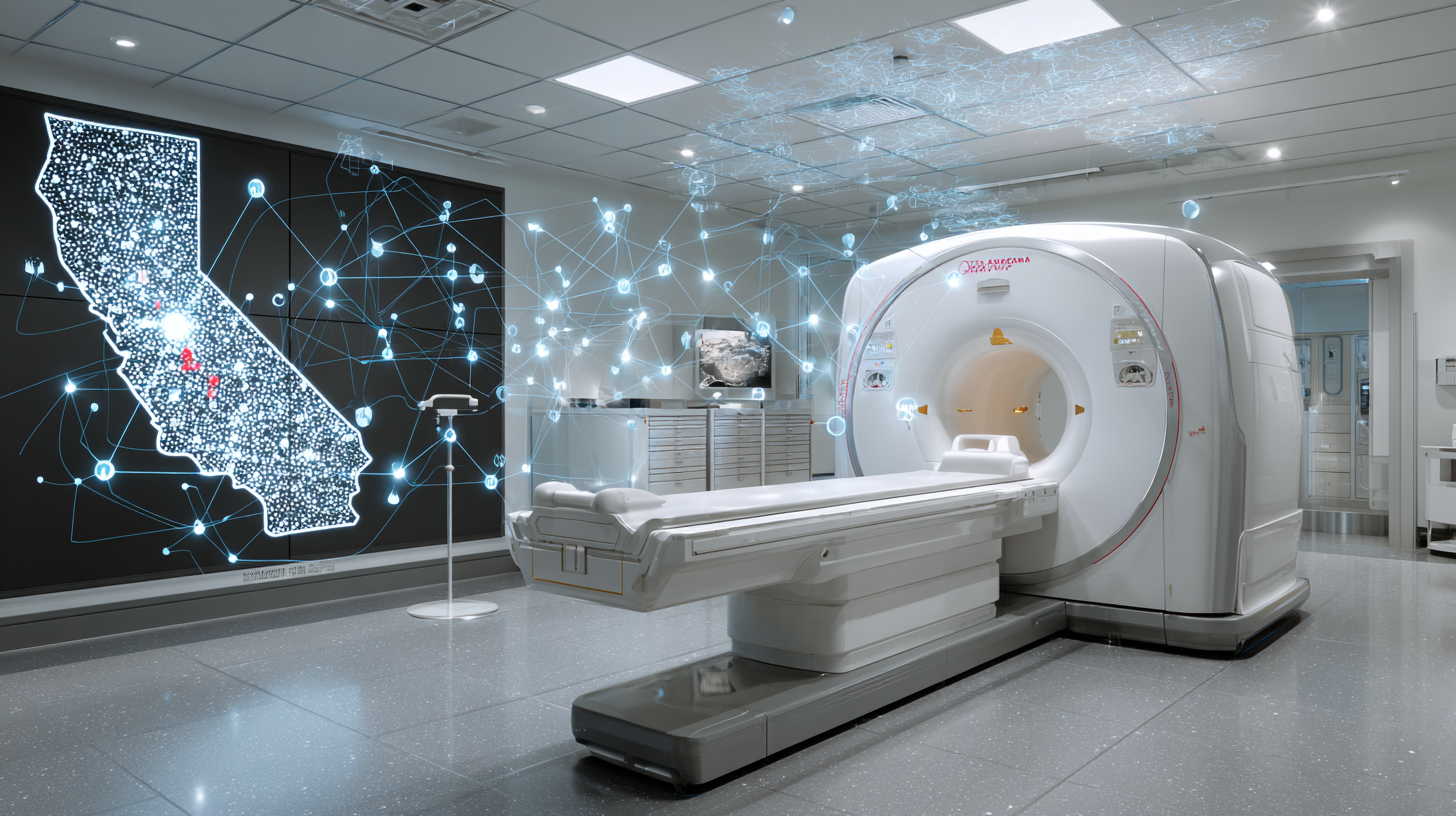
Variability in abdominal MRI protocols can balloon table time, frustrate referring clinicians, and force patients to return for repeat scans. Until this year, RadNet’s California network faced exactly that problem: 23 scanners from three vendors, 14 different “liver” protocols, and repeat-scan rates creeping above 3 %. In January 2025 Dr. Sidharth “Tony” Handa, MD convened a multidisciplinary task force to create a single, evidence-based sequence set for every magnet in the state. Six months later the network has cut its repeat rate to 0.8 % and shaved eight minutes off the average exam. This article explains how they did it—and what any imaging service can borrow from the playbook.
Why MRI Protocol Harmonization Matters
- Time is throughput. Cross-vendor variation was adding 10–12 minutes per abdominal study—roughly one lost scan slot per magnet, per day.
- Reproducibility is now regulated. In 2024 the American College of Radiology began flagging sites with >2 % protocol deviations as “needs improvement” in its MR accreditation audits.
- Patients notice. A 2023 RadNet survey showed that “being called back for another scan” ranked as the #1 driver of one-star reviews.
The 4-Step Playbook
| Step | Key Actions | Pro Tips |
| 1. Sequence Audit & Gap Analysis | Export every abdominal protocol from each console; catalog TR/TE, flip angle, spatial resolution, breath-hold length, and contrast timing in a spreadsheet. | Don’t just compare to textbook values—map each parameter to clinical endpoints (e.g., lesion-to-liver contrast). |
| 2. Consensus Build | Convene radiologists, MR physicists, and lead technologists in a half-day workshop to draft vendor-neutral “guardrails.” | Keep decisions transparent: publish why each TR or echo-train-length was chosen to avoid back-room second guessing. |
| 3. Pilot & QA Dashboard | Roll out the new sequences on three sites; install a live dashboard that flags off-protocol exams and reject images in real time. | Color coding works: green for compliant, yellow for minor deviation, red for out-of-spec. Techs respond faster to visual alerts than e-mails. |
| 4. Network-Wide Roll-Out | Deploy the protocol cluster-by-cluster over ten weeks; a traveling “tiger team” rides shotgun during go-live week. | Leave room for “vendor quirks.” If a 1.5 T platform can’t match a 3 T’s breath-hold, document the exception—don’t revert the entire protocol. |
Outcomes After Six Months
| Metric | December 2024 Baseline | June 2025 |
| Repeat-scan rate | 3.2 % | 0.8 % (<1 % goal) |
| Average table time | 31 min | 23 min ( – 8 min) |
| Radiologist confidence* | 4.1 / 5 | 5.0 / 5 ( + 22 %) |
*32 abdominal imagers surveyed, Likert 1–5.
“I used to scroll through six liver protocols just to pick the ‘right’ one. Now I hit one button and know the images will match yesterday’s case.” — Technologist, Riverside site
Frequently Asked Questions
Q: How did you handle scanners older than 2014?
A: We built a “legacy” parameter set with slightly thicker slices and longer echo trains, then locked technologists out of editing. Even these systems met the <1 % repeat goal.
Q: Did you need new coils?
A: Only three 16-channel torso coils were upgraded to 32-channel. For most magnets, time savings came from optimized flip angles and breath-hold coaching—not hardware spend.
Q: Any incidental wins?
A: Yes—radiologists report fewer motion artifacts because the standardized protocol shortened breath-hold times by 5–7 seconds.
Take-Home Checklist
- 🗹 Inventory every abdominal coil and injector—hardware limits dictate protocol ceilings.
- 🗹 Publish vendor-neutral guardrails (TR, TE, flip angle, slice thickness) so techs know what’s non-negotiable.
- 🗹 Deploy a real-time QA dashboard first. If techs see yellow/red alerts during the pilot, the statewide roll-out will feel intuitive, not punitive.
- 🗹 Celebrate milestones. Each time a cluster hits <1 % repeats, blast it on the intranet and buy the team coffee—culture change sticks when wins are visible.
Next Steps: Toward AI-Ready Protocols
Harmonization isn’t the finish line—it’s the on-ramp for AI. Consistent, high-quality DICOM is exactly what deep-learning liver-lesion tools need to thrive (see our companion post on AI liver detection). With the sequence library now locked, Dr. Handa’s team is tagging thousands of studies for an upcoming multi-center algorithm pilot.
Conclusion
Six months, four steps, one statewide protocol: the RadNet California experience proves that MRI harmonization is less about vendor politics and more about disciplined workflow. Eight extra minutes per scan reclaimed across 23 scanners adds up to over 2 000 patient slots per year—slots now filled with faster, clearer answers.
Need a roadmap to unify your own MRI protocols—or a speaker for your next quality summit? Contact Dr. Handa to bring mission-level precision to your imaging service.
References
- American College of Radiology. MR Accreditation Program Guidance Update, Nov 2024.
- Handa S et al. “Impact of Vendor-Neutral Protocols on Abdominal MRI Repeat Rates.” Abstract, RSNA 2024 Annual Meeting.
- Lee J, Garcia M. “Quality Dashboards in Multi-Site MRI.” J. Digit Imaging. 2025;38(2):155-162.

Sidharth Hanny
Related Articles
Explore more articles related to this topic
Quality Improvement
Cutting STAT Report Turnaround by 30 % — Workflow Hacks for 2025
Turnaround time (TAT) has become the quality metric most closely watched by…

Sidharth Hanny
6 Aug 2025
•5 min read