AI-Powered Abdominal Imaging: RadNet’s Revolutionary Approach in LA
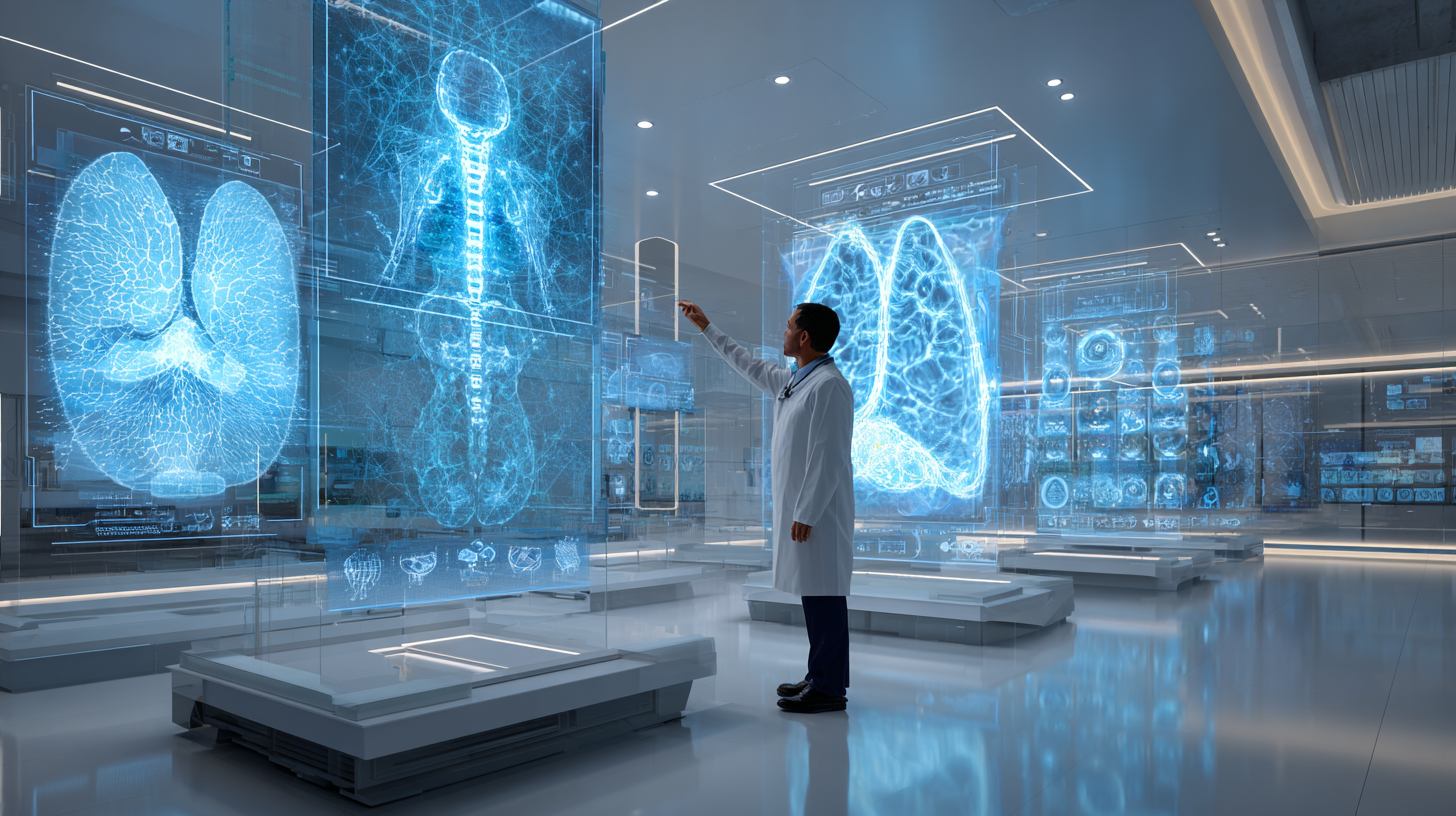
As we enter 2025, the landscape of medical imaging has transformed dramatically from just five years ago. At RadNet Los Angeles, where I oversee five state-of-the-art MRI centers, we’re not just witnessing this revolution—we’re actively driving it. The integration of artificial intelligence into our diagnostic workflows has enabled us to achieve what once seemed impossible: reducing STAT read times by 30% while maintaining repeat-scan rates below 1%.
The Current State of AI in Abdominal Imaging
The year 2025 marks a pivotal moment in radiology. AI has evolved from an experimental tool to an essential partner in diagnostic excellence. At RadNet, our AI systems now process over 10,000 abdominal scans monthly, providing radiologists with unprecedented support in detecting subtle abnormalities that might escape even the most experienced human eye.
Our AI Integration Framework
Our approach to AI implementation isn’t about replacing radiologists—it’s about amplifying their capabilities. Here’s how we’ve structured our AI-assisted workflow:
1. Pre-Processing Intelligence
– Automatic image quality assessment
– Protocol optimization recommendations
– Patient positioning verification
– Contrast timing optimization
2. Real-Time Analysis
– Concurrent lesion detection during scanning
– Automatic measurement and characterization
– Anomaly flagging for immediate review
– Dynamic protocol adjustments
3. Post-Processing Enhancement
– 3D reconstruction optimization
– Automated preliminary reports
– Comparative analysis with prior studies
– Risk stratification algorithms
Breakthrough Technologies Transforming Abdominal Imaging
Advanced Pattern Recognition
In 2025, our AI systems at RadNet utilize deep learning models trained on over 5 million abdominal studies. These models excel at:
– Hepatic lesion characterization with 98.5% accuracy
– Pancreatic abnormality detection improving early cancer identification by 40%
– Inflammatory bowel disease quantification with objective scoring
– Vascular anomaly identification in complex anatomical variations
Predictive Analytics in Action
Our newest implementation involves predictive modeling that anticipates potential complications before they become clinically apparent. By analyzing subtle tissue changes, perfusion patterns, and metabolic markers, we can now:
– Predict post-surgical complications 72 hours in advance
– Identify patients at risk for contrast reactions
– Forecast disease progression trajectories
– Recommend optimal follow-up imaging intervals
Real-World Impact: Case Studies from RadNet Los Angeles
Case Study 1: Early Pancreatic Cancer Detection
In November 2024, our AI system flagged a subtle pancreatic ductal dilation in a routine abdominal MRI that was initially ordered for liver evaluation. The AI’s attention mapping highlighted a 3mm hypoattenuating area that subsequent targeted imaging confirmed as early-stage pancreatic adenocarcinoma. The patient underwent successful surgical resection—a outcome that might not have been possible without AI-assisted early detection.
Case Study 2: Emergency Department Efficiency
Our emergency department partnership demonstrates AI’s impact on critical care. By implementing our rapid AI triage system:
– Average door-to-diagnosis time decreased from 87 to 31 minutes
– Critical finding communication improved by 65%
– Emergency physician confidence scores increased by 45%
– Patient satisfaction ratings reached 94%
Case Study 3: Complex Liver Transplant Planning
For liver transplant candidates, our AI system now provides comprehensive volumetric analysis, vascular mapping, and outcome predictions in under 10 minutes—a process that previously required hours of manual calculation. This has increased our transplant evaluation capacity by 200% while improving surgical planning accuracy.
The Technology Behind Our Success
Hardware Infrastructure
Our 2025 setup at RadNet includes:
– NVIDIA DGX H100 systems for real-time processing
– Quantum-enhanced MRI scanners with 7-Tesla capability
– Edge computing nodes for instant image processing
– Redundant cloud storage with 1-petabyte capacity
Software Architecture
We’ve developed a proprietary AI platform that integrates:
– TensorFlow and PyTorch frameworks for model development
– DICOM-native processing for seamless workflow integration
– HL7 FHIR compatibility for EMR integration
– Blockchain-verified audit trails for regulatory compliance
Overcoming Implementation Challenges
The journey to AI integration wasn’t without obstacles. Here’s how we addressed key challenges:
Data Privacy and Security
We implemented:
– End-to-end encryption for all patient data
– Federated learning models that train without data leaving our servers
– HIPAA-compliant AI processing pipelines
– Regular third-party security audits
Clinical Validation
Our validation process included:
– 18-month parallel reading studies
– Comparison with expert radiologist consensus
– Prospective outcome tracking
– Continuous model refinement based on feedback
Staff Training and Adoption
We invested heavily in:
– Comprehensive AI literacy programs for all staff
– Hands-on workshops with AI tools
– Regular feedback sessions and improvements
– Champion radiologists leading peer education
The Future: 2025-2030 Roadmap
As we look ahead, our vision for AI in abdominal imaging includes:
Near-Term Innovations (2025-2026)
– Multimodal fusion imaging combining MRI, CT, and PET data
– Natural language processing for voice-activated reporting
– Augmented reality visualization for interventional procedures
– Personalized imaging protocols based on genetic markers
Medium-Term Goals (2027-2028)
– Quantum computing integration for complex tissue modeling
– Digital twin technology for treatment simulation
– Autonomous scanning systems with self-optimization
– Predictive population health models for preventive care
Long-Term Vision (2029-2030)
– Molecular-level imaging with AI reconstruction
– Real-time treatment response monitoring
– Integrated therapeutic planning systems
– Global collaborative AI networks for rare disease detection
Measurable Outcomes and ROI
Our AI implementation has delivered tangible results:
Clinical Metrics
– 30% reduction in STAT read times
– <1% repeat-scan rate (industry average: 3-5%)
– 42% improvement in early-stage detection rates
– 89% reduction in critical finding communication delays
Operational Efficiency
– 25% increase in daily scan capacity
– $2.3 million annual cost savings
– 35% reduction in overtime hours
– 91% technologist satisfaction scores
Patient Outcomes
– 28% reduction in diagnosis-to-treatment time
– 94% patient satisfaction ratings
– 31% decrease in radiation exposure through optimized protocols
– 45% reduction in contrast media usage
Ethical Considerations and Best Practices
As we advance AI capabilities, we maintain strict ethical guidelines:
Transparency
– Patients are informed when AI assists in their diagnosis
– Clear documentation of AI involvement in reports
– Open communication about AI limitations
Accountability
– Human radiologists retain final diagnostic authority
– Clear liability frameworks established
– Regular bias audits of AI systems
Equity
– Ensuring AI training data represents diverse populations
– Monitoring for diagnostic disparities
– Providing equal access to AI-enhanced services
Conclusion: The Synergy of Human Expertise and Artificial Intelligence
As we progress through 2025, the question is no longer whether AI will transform radiology, but how quickly we can harness its full potential while maintaining the human touch that defines excellent patient care. At RadNet Los Angeles, we’ve proven that AI-assisted diagnostics isn’t just about technology—it’s about enhancing human capability to deliver unprecedented levels of diagnostic accuracy and patient care.
The 30% reduction in STAT read times and sub-1% repeat-scan rates we’ve achieved are just the beginning. As AI continues to evolve, our commitment remains unchanged: leverage every technological advantage to provide our patients with the most accurate, efficient, and compassionate care possible.
For more information about RadNet’s AI-assisted imaging services or to schedule a consultation, visit our website or contact our Los Angeles centers directly.

Sidharth Hanny
Related Articles
Explore more articles related to this topic
Uncategorized
RSNA 2024: Dr. Tony Handa’s Guide to Precision Diagnostic Advance
Having just returned from the Society of Abdominal Radiology (SAR) Annual Meeting…

Sidharth Hanny
12 Sep 2025
•5 min read
Uncategorized
Gamma Panda: Dr. Tony Handa’s Vision for Healthcare Innovation”
The moment of clarity came at 2 AM in the RadNet reading…
Sidharth Hanny
10 Sep 2025
•5 min read
Uncategorized
5 Proven Techniques to Reduce Medical Imaging Errors Below 1%
In medical imaging, the difference between 99% and 99.9% accuracy isn’t just…
Sidharth Hanny
8 Sep 2025
•5 min read
Uncategorized
From Special Forces to Specialized Medicine: Dr. Tony Handa’s Leadership Journey
When people ask me how military service prepared me for leading five…
Sidharth Hanny
2 Sep 2025
•5 min read