Percutaneous Image-Guided Interventions 2025
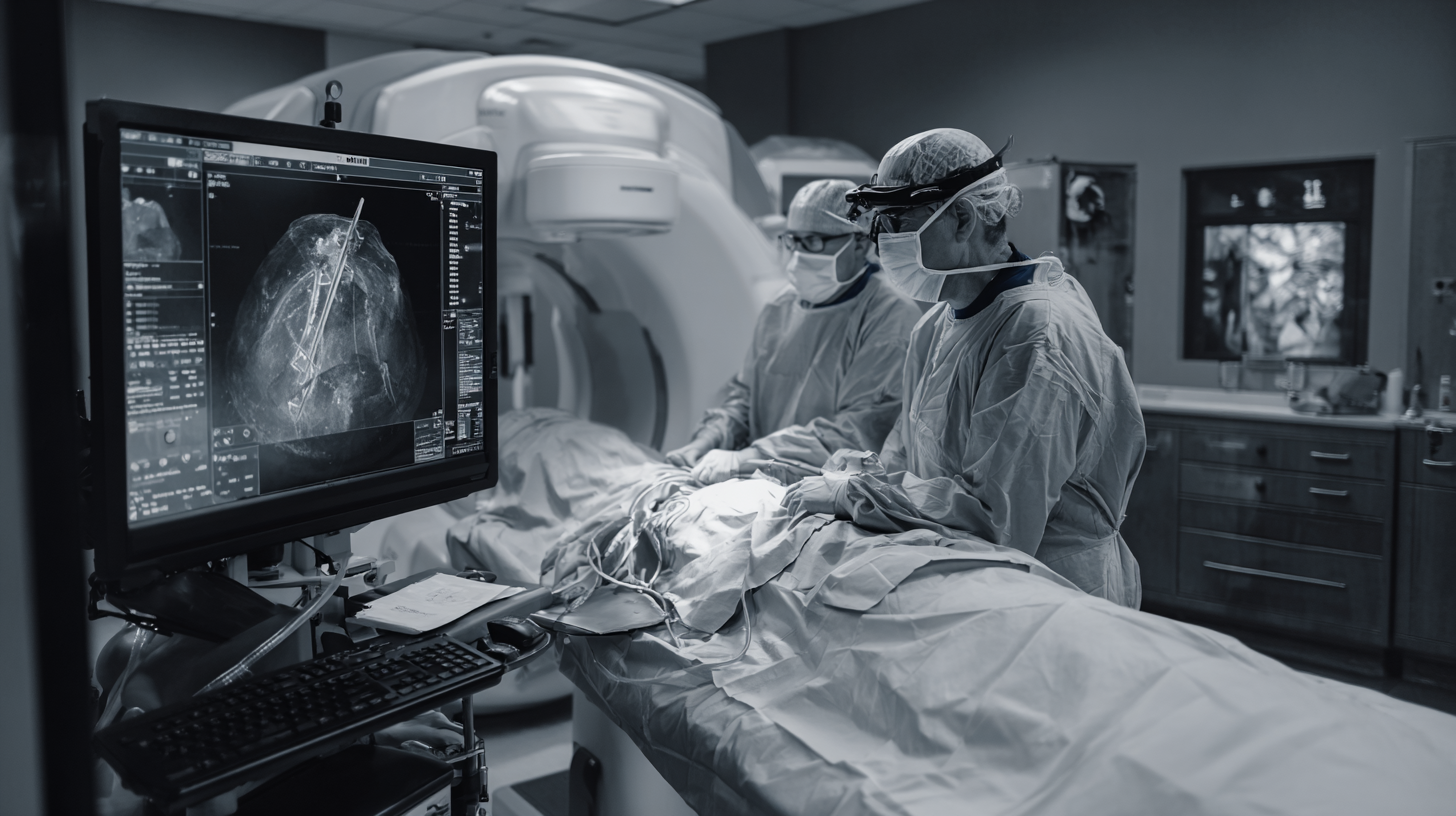
Across many outpatient networks, biopsies, drainages, and ablations are still referred to hospital IR suites—costing patients convenience and practices revenue. In 2023 Dr. Sidharth “Tony” Handa, MD launched a percutaneous image-guided intervention program at RadNet’s Antelope Valley sites. Eighteen months later the service has logged zero major complications and slashed biopsy out-migration by 70 %. Here’s the blueprint.
Why Bring IR Procedures In-House?
- Patient retention: 1 in 3 patients referred to the hospital never returns for follow-up imaging.
- Cost control: Hospital technical fees run 2 – 3× outpatient rates.
- Scheduling agility: In-house slots can be turned around in 48 h vs. 5–7 days at tertiary centers.
Building the Business Case
| Component | Baseline | Target | Result (18 mo) |
| Annual biopsy volume | 0 (all referred) | 250 | 212 |
| Technical revenue / case | n/a | $1 ,150 | $1 ,140 (actual) |
| Complication benchmark | < 1 % | < 1 % | 0 % major; 1 minor |
ROI hit month 10, aided by repurposing an under-utilised CT suite three afternoons per week—no new magnet or room build-out.
Four Pillars of a Safe & Efficient Program
| Pillar | Action Items |
| 1 • Protocol Design | • Standard 3-phase contrast CT for liver / kidney targets • 2 % lidocaine + 20G core needle default • Built-in pause for final scout image |
| 2 • Team Training | • 4-hour workshop: sterile technique, timeout checklist, emergency drill • Oncology nurse cross-trained as procedural circulator |
| 3 • Room Readiness | • CT injector recalibrated monthly • Disposable packs pre-staged → 3 min setup |
| 4 • Post-Op Monitoring | • 2-bed recovery alcove with pulse-ox + BP every 15 min for 90 min • Written discharge + 24-h nurse call-back |
Workflow Snapshot
- Referral Triage (T-1 day) – Scheduler verifies anticoag meds & lab values.
- Day-of Consent (T0) – Radiologist reviews prior imaging, overlays needle path on PACS.
- Time-Out & Sterile Prep – Checklist posted on wall monitor; audible confirmation logged in RIS.
- Real-Time Imaging – “Step-and-shoot” CT low-dose fluoro mode keeps DLP ≤ 200 mGy·cm.
- Specimen Handoff – Pathology courier pick-up within 30 min ensures < 4 h fixation window.
- Recovery & Discharge – Written haemorrhage warnings; nurse follow-up at 24 h and 7 d.
Outcomes at 18 Months
| Metric | Result |
| Major complications (SIR C–F) | 0 / 212 cases |
| Minor complications (SIR A–B) | 4 small haematomas, managed conservatively |
| Biopsy diagnostic yield | 96.4 % (≥ 4 core fragments / case) |
| Patient satisfaction (Press-Ganey) | 4.8 / 5 |
| Out-migration to hospital IR | –70 % vs. 2022 baseline |
Lessons Learned
| Challenge | Fix |
| Surge of late-add-on cases slowed schedule | Blocked one “emergency slot” daily; unused slot converts to routine at noon. |
| Path courier delays threatened tissue integrity | Added on-call courier after 15:00 weekdays. |
| Technologist anxiety about bleeding risks | Quarterly simulation drill with moulage kit; confidence scores rose from 3.1 → 4.6 / 5. |
Safety Checklist (Download & Post in Suite)
- Verify INR ≤ 1.5 and PLT > 50 K.
- Time-out includes laterality + target organ.
- Keep 1 mg IV protamine in fridge (heparin reversal).
- Post-biopsy CT delay scan at 5 min to rule out bleeding.
- Document phone follow-up or EMR message at 24 h.
Print at 18 pt font and laminate; attach to procedure cart.
Future Directions
- Microwave ablation: Feasibility study scheduled Q1 2026.
- AI planning assist: Prototype algorithm suggests shortest rib-safe trajectory; IRB under review.
- Patient-facing portal: Post-op care videos in English & Spanish to launch this fall.
A well-structured percutaneous intervention program can transform an outpatient imaging network—improving continuity of care, boosting revenue, and relieving hospital IR congestion. Dr. Handa’s Antelope Valley experience proves you don’t need a tertiary-level suite to achieve zero major complications and 70 % retention. What you do need is rigorous protocol design, empowered staff, and relentless QA.
Thinking of launching or scaling your own image-guided procedure service? Schedule a strategy call with Dr. Handa and bring mission-level precision to your outpatient practice.
Notes & Suggested Citations
- Society of Interventional Radiology. Quality Improvement Guidelines for Percutaneous Biopsy (2024).
- RadNet Internal QA Dashboard, Antelope Valley Region, Jan 2023–Jun 2025.
- National Comprehensive Cancer Network. Hepatobiliary Cancers, v2.2025 (guidance on biopsy indications).

Sidharth Hanny
Related Articles
Explore more articles related to this topic
Uncategorized
RSNA 2024: Dr. Tony Handa’s Guide to Precision Diagnostic Advance
Having just returned from the Society of Abdominal Radiology (SAR) Annual Meeting…

Sidharth Hanny
12 Sep 2025
•5 min read
Uncategorized
Gamma Panda: Dr. Tony Handa’s Vision for Healthcare Innovation”
The moment of clarity came at 2 AM in the RadNet reading…
Sidharth Hanny
10 Sep 2025
•5 min read

Uncategorized
5 Proven Techniques to Reduce Medical Imaging Errors Below 1%
In medical imaging, the difference between 99% and 99.9% accuracy isn’t just…
Sidharth Hanny
8 Sep 2025
•5 min read

Uncategorized
AI-Powered Abdominal Imaging: RadNet’s Revolutionary Approach in LA
As we enter 2025, the landscape of medical imaging has transformed dramatically…
Sidharth Hanny
4 Sep 2025
•5 min read