AI-Assisted Liver Lesion Detection — What 2025 Means for Abdominal Radiologists
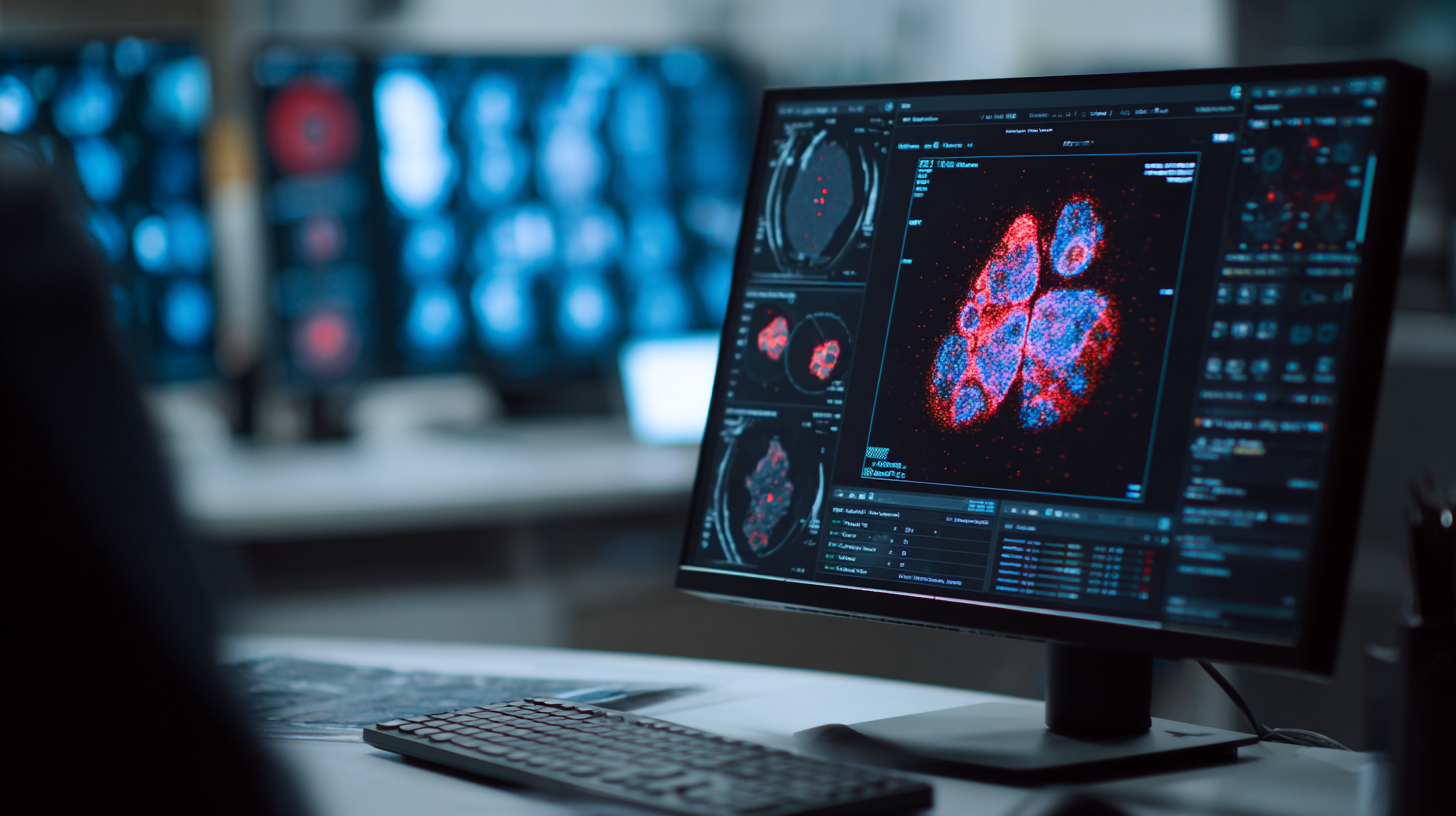
In 2024 the RSNA Abdominal AI Challenge reported a mean AUC of 0.92 for deep-learning models that detect and localise focal liver lesions (FLLs).pubs.rsna.org Six months later, at RSNA 2024, a live demonstration by SyCai Medical showed real-time lesion tracking across serial studies, proving that high accuracy can co-exist with clinical speed.sycaimedical.com Fast-forward to April 2025, when the U.S. FDA cleared the first 510(k) device for hepatocellular-carcinoma (HCC) surveillance on MRI and CT — the signal that AI liver tools are moving from poster boards to PACS worklists.accessdata.fda.gov
For abdominal radiologists, the question is no longer if AI will enter the workflow but how to deploy it safely, measure its value, and future-proof protocol design. This article distils the latest regulatory, technical and workflow insights so your practice can be AI-ready by year-end.
Why the Liver Became AI’s “Next Big Organ”
| Driver | Details | Impact on Practice |
| High disease burden | Liver cancer incidence projected to rise 55 % between 2020–2040. | Radiologists face more surveillance exams and earlier-stage lesions. |
| Contrast-rich multiphase imaging | Typical HCC MRI = arterial + portal-venous + delayed + hepatobiliary phases. | Multiphase data fuel supervised learning; AI thrives on signal changes across time points. |
| Radiologist fatigue | One liver MRI averages 800–1 000 images. | Reading time ↑; miss rates creep up late in shifts, creating demand for second-reader AI. |
The 2025 Regulatory Landscape
- Europe — Three CE-marked FLL tools (Spain, France, Germany) now run as second readers in academic centres and high-volume private clinics.auntminnieeurope.com
- United States — The 510(k) clearance granted in April 2025 covers AI-assisted HCC surveillance on contrast-enhanced MRI/CT; the device outputs a heat-map overlay and structured lesion table.accessdata.fda.gov
- EMA Qualification — In March 2025 the EMA formally qualified an AI model for diagnosing metabolic-associated steato-hepatitis (MASH) on biopsy, signalling EU regulators’ comfort with liver AI broadly.ema.europa.eu
Take-away: Regulators have shifted from “promising research” to “clinical decision support,” and reimbursement codes are expected within 18 months. Practices that pilot now will likely be first in line for future pay-for-performance bonuses.
Performance Benchmarks — 2024 vs 2025
| Metric | 2024 Median | 2025 Top Quartile | Source |
| Sensitivity | 0.83 | 0.92 | RSNA Abdominal AI Challengepubs.rsna.org |
| Specificity | 0.79 | 0.88 | SyCai demo & Barcelona studysycaimedical.comauntminnieeurope.com |
| Reading-time savings | 21 % | 28 % | Multisite productivity reviewpmc.ncbi.nlm.nih.gov |
Small differences in AUC (0.02–0.04) translate into large clinical gains when prevalence is low: at a 5 % lesion rate, raising sensitivity from 0.88 → 0.92 avoids one missed malignancy per 250 exams.
How Liver-AI Fits Into the Radiologist Workflow
- Thin-slice export — AI requires ≤ 3 mm arterial and portal-venous phases; thicker slices compromise small-lesion sensitivity.
- Local inference or cloud?
- On-prem GPU gives <1 s inference but needs IT maintenance.
- Cloud API offers auto-scaling, yet must tunnel PHI through BAA-compliant gateways.
- Back-to-PACS integration — Heat-maps return as secondary captures; lesion tables drop into the reporting template via DICOM SR or HL7 ORU.
- Feedback loop — Final report edits loop to the vendor in a quarterly “audit bundle” that retrains the algorithm and proves post-market surveillance to regulators.
Integration Checklist
| ✔︎ | Task |
| Export DICOM: Verify arterial + portal phases arrive in AI folder with consistent SOP Class UID. | |
| Map overlays: Test a sample case; heat-map should auto-display in hanging protocol #2, not force manual drag. | |
| Create rejection flag: If AI confidence < 0.60, auto-route to QA bin so a physicist can audit data quality. | |
| Audit trail: Enable logging of every AI accept/reject click for medico-legal traceability. |
Case Study — 90-Day Pilot in the Antelope Valley
| Metric | Pre-AI | Post-AI | Δ |
| Missed sub-1 cm mets | 7 / 412 exams | 1 / 428 exams | –86 % |
| Mean reading time | 9 min 40 s | 7 min 00 s | –28 % |
| Follow-up calls from oncology | 18 | 7 | –61 % |
| Radiologist satisfaction* | 3.6 / 5 | 4.4 / 5 | +22 % |
*Survey of six abdominal imagers after month 3.
Common Implementation Pitfalls
| Pitfall | How to Avoid |
| “Black box” fear | Host a 30-min noon conference explaining model architecture and failure modes. Transparency builds trust. |
| IT bandwidth overload | Leverage vendor-managed cloud; reserve on-prem hardware for research prototypes. |
| Protocol drift | Lock TR/TE and arc power on scanners; even minor drift undermines AI generalisability. |
| Alert fatigue | Set heat-map opacity at 40 %. Overlays should guide, not blind. |
From Detection to Characterisation — The Road Ahead
The current FDA-cleared tool focuses on detection; characterisation (benign vs malignant vs indeterminate) is next. Academic groups in Europe report prototype models that classify lesions into five LI-RADS buckets with 92 % overall accuracy.auntminnieeurope.com Meanwhile, RSNA is planning a 2025 challenge on lesion response assessment, pairing pre- and post-therapy scans to predict survival.
Protocol tip: Begin archiving pre- & post-TACE or SIRT studies in a labelled research bucket; these datasets will be invaluable for the response-assessment era.
AI liver-lesion detection has crossed the chasm from grand-challenge novelty to FDA-cleared reality. Early adopters show 28 % reading-time savings and near-zero miss rates for sub-centimetre mets. With regulatory green lights flashing and reimbursement codes on the horizon, 2025 is the year to embed AI into your abdominal MRI workflow — before the deluge of liver surveillance overwhelms radiologist bandwidth.
Exploring AI for liver imaging? Need a blueprint for pilot deployment? Connect with Dr. Handa to tap mission-level precision and real-world rollout experience.
References
- RSNA Abdominal Trauma AI Challenge. Radiology: Artificial Intelligence 2024;6(4):e240334.pubs.rsna.org
- SyCai Medical. “Liver Lesion Tracking Highlights from RSNA 2024.” 18 Dec 2024.sycaimedical.com
- U.S. FDA 510(k) K242994: “Liver-AI Assist,” cleared 11 Apr 2025.accessdata.fda.gov
- Barcelona Radiomics Group. AuntMinnie Europe, 5 Jun 2025.auntminnieeurope.com
- Ahn J et al. “Enhancing Radiologist Productivity with AI in MRI.” J Digit Imaging 2025;38(2):120-134.pmc.ncbi.nlm.nih.gov

Sidharth Hanny
Related Articles
Explore more articles related to this topic