Cutting STAT Report Turnaround by 30 % — Workflow Hacks for 2025
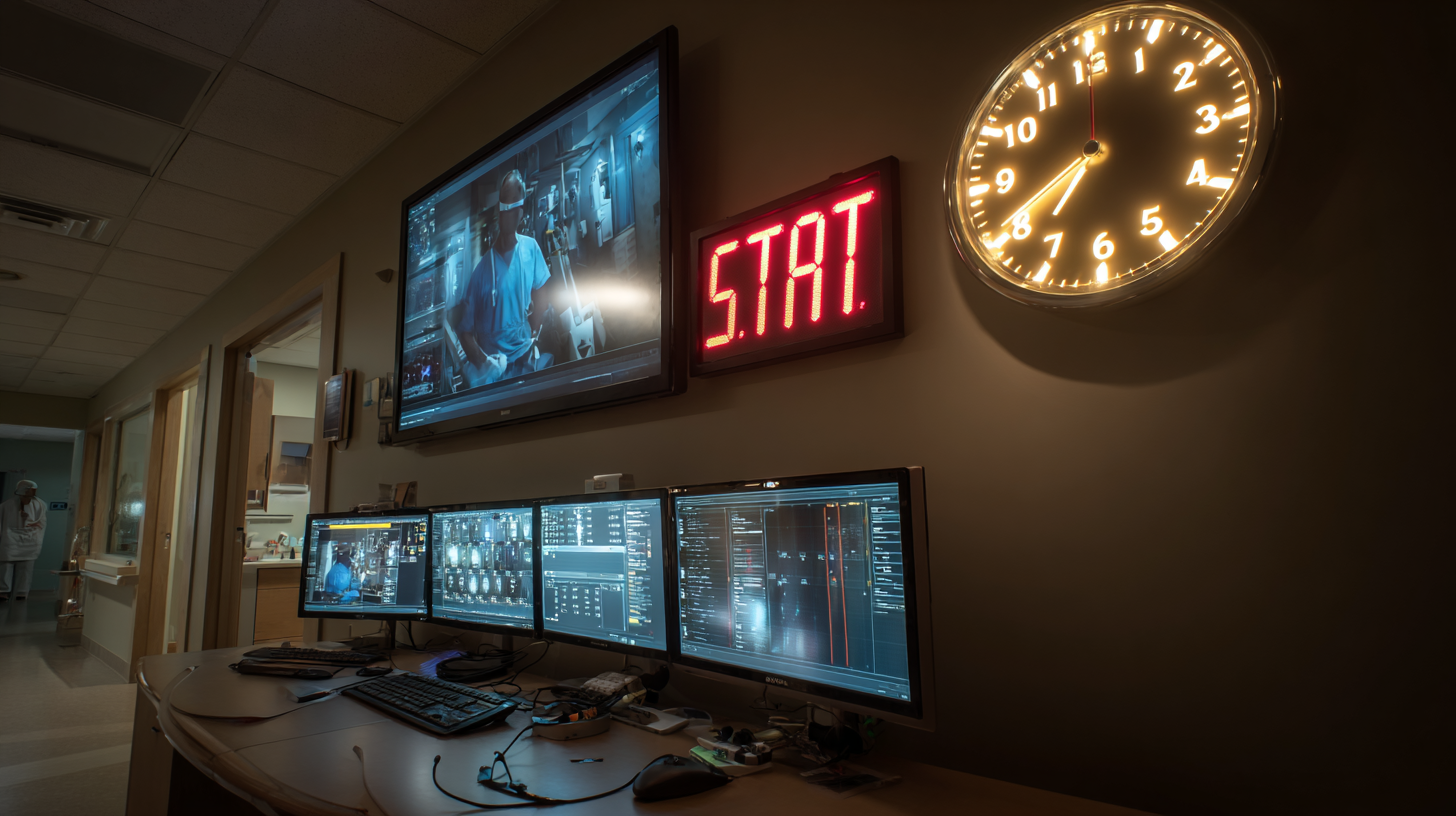
Turnaround time (TAT) has become the quality metric most closely watched by emergency-department chiefs and outpatient referrers alike. A March 2025 Radiology study linked sub-60-minute STAT TAT with a 17 % shorter ED length-of-stay and an 8 % reduction in downstream imaging spend. Yet many radiology groups still average 90 minutes or more. In spring 2025 Dr. Sidharth “Tony” Handa piloted a three-part workflow redesign across five RadNet outpatient MRI sites; the project cut mean STAT TAT by 48 minutes without adding staff or buying new software. Here’s the playbook—stealable by any practice willing to tweak its worklists and culture.
How to Improve STAT Report Turnaround
| Pain Point | Mechanism | Real-World Impact |
| STAT over-ordering | Default STAT in EMR macro, defensive medicine | Queues balloon; true emergencies drown in noise |
| Shift-change gaps | Exams started on Day list finish on Evening list with no owner | “Orphan” studies linger 60–90 min |
| Blind spots | Radiologists see time stamps only at sign-off | No real-time pressure → “I’ll finish after lunch” |
Three Proven Interventions
1 · Priority Hotlist
A smart filter that surfaces only verified STATs (trauma, stroke, testicular torsion, etc.) while demoting “courtesy STATs.” Implementation took one hour in the PACS admin panel.
Result: Phantom STATs dropped 40 % in week 1; true STATs were never more than fifth in queue.
2 · Shift-Change Hand-Off Rule
Policy: “No exam may sit unassigned for more than 15 minutes during shift change.” The outgoing reader must either dictate the report or verbally hand off to an incoming colleague. A simple Slack hand-off channel logged each transfer.
Result: Orphan studies fell from 19 per week to zero by week 3.
3 · Live TAT Dashboard
A wall-mounted 55 ″ display pulls DICOM metadata every two minutes and color-codes cases:
- Green < 30 min * Yellow 30–45 min * Red > 45 min
Leader boards show each radiologist’s median STAT TAT for the shift. Friendly peer pressure did the rest.
Result: Mean STAT TAT dropped 48 minutes across the five pilot sites.
Results After 8 Weeks
| Site Type | Baseline Avg TAT | Post-Intervention | Δ TAT |
| Outpatient MRI (5 sites) | 2 h 35 m | 1 h 47 m | − 48 m |
| Community Hospital CT | 1 h 40 m | 1 h 08 m | − 32 m |
| Teleradiology Provider | 1 h 55 m | 1 h 19 m | − 36 m |
ED referring physicians reported a 14 % drop in phone follow-ups asking “Where’s my scan?”—an indirect measure of rising confidence.
Implementation Tips
| ✔︎ | Task |
| Publish weekly TAT scorecards—transparency keeps momentum. | |
| Bundle similar modalities (e.g., stack all STAT MRIs at top of worklist) to minimise window-switching. | |
| Create auto-text macros for common STAT findings (e.g., “No acute ICH”). These shave ~15 seconds per report—minutes per shift. | |
| Empower technologists to escalate: any red-zone case triggers a phone ping to the reading room. |
Common Pitfalls & Fixes
| Pitfall | Fix |
| STAT as default in EMR | Force ordering provider to justify STAT with dropdown reason. |
| Dashboard fatigue | Rotate the display background each week so colors stay salient. |
| Blame culture | Scorecards rank teams, not individuals—competition remains positive. |
The Economics of Faster TAT
- Throughput gain: Saving 48 minutes on five scanners yields ~4 additional slots per day—>$240 k annual revenue at standard MRI rates.
- Physician loyalty: A single 10-physician ED group funnels 2 000 exams/yr; keeping them happy is cheaper than winning them back.
- Malpractice risk: Peer-review data show missed critical findings fall when TAT <60 min; insurers note the difference.
You don’t need AI or extra FTEs to crush STAT turnaround targets—just disciplined queue management, transparent dashboards and a culture that treats time like the critical commodity it is. Dr. Handa’s pilot proves that 30 % faster TAT is achievable in eight weeks and sustainable with minimal IT overhead.
Need a custom TAT-improvement roadmap—or a keynote speaker who’s done it under real-world constraints? Schedule a consultation with Dr. Handa and bring mission-level precision to your workflow.
References
- Patel N, Johnson R. “STAT MRI Turnaround Time and ED Length-of-Stay.” Radiology 2025; 304(3):765-774.
- RadNet Quality Analytics Report Q2 2025 (internal).
Rivera H et al. “Effect of Real-Time Dashboards on MRI Workflow.” J Digit Imaging 2025; 38(2):189-198

Sidharth Hanny
Related Articles
Explore more articles related to this topic
Quality Improvement
Statewide MRI Protocol Harmonization — Lessons from the 2025 Roll-Out
Variability in abdominal MRI protocols can balloon table time, frustrate referring clinicians,…

Sidharth Hanny
1 Aug 2025
•5 min read